
Late Signals
Alerts arrive after route quality has already degraded, forcing rushed lane or path changes.
Viallex is a premium intelligence layer above maps. It analyzes traffic pressure, route volatility, and timing risk in real time, then outputs clear guidance you can trust.
Built for high-frequency drivers, commuters, and mobility teams.
The biggest failure in navigation is not map quality. It is decision timing. By the time many apps react, the highest-quality route window has already closed.
Alerts arrive after route quality has already degraded, forcing rushed lane or path changes.
Multiple routes look similar on-screen while real-world volatility is dramatically different.
Too much low-priority guidance increases hesitation exactly when confidence should increase.
Maps show roads. Viallex interprets complexity. The system tracks what usually causes bad decisions: sudden congestion shifts, fragile ETA assumptions, and route branches that look equal but are not equal in real conditions.
Continuously ingests live route signals, traffic behavior, and timing context.
Models pressure and volatility, then calculates confidence for each route path.
Outputs concise guidance with enough lead time to act calmly and decisively.
This is the current Viallex app experience: black-native, signal-led, and tuned for fast decision quality under route pressure. The interface stays calm while traffic complexity escalates.
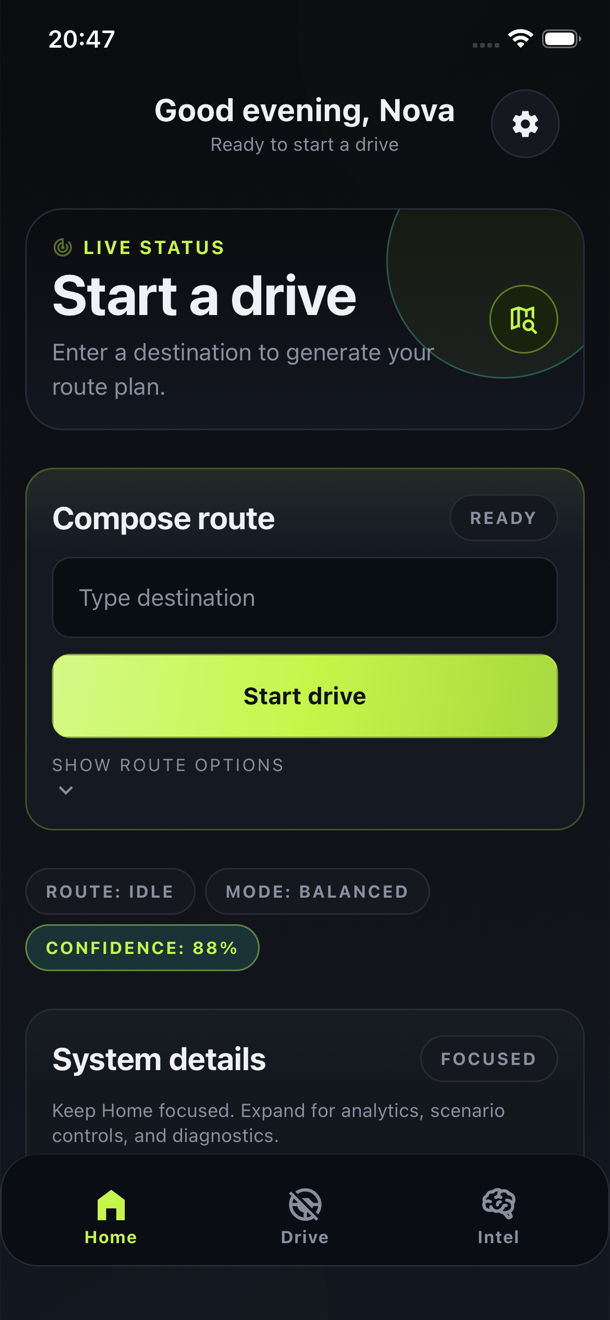
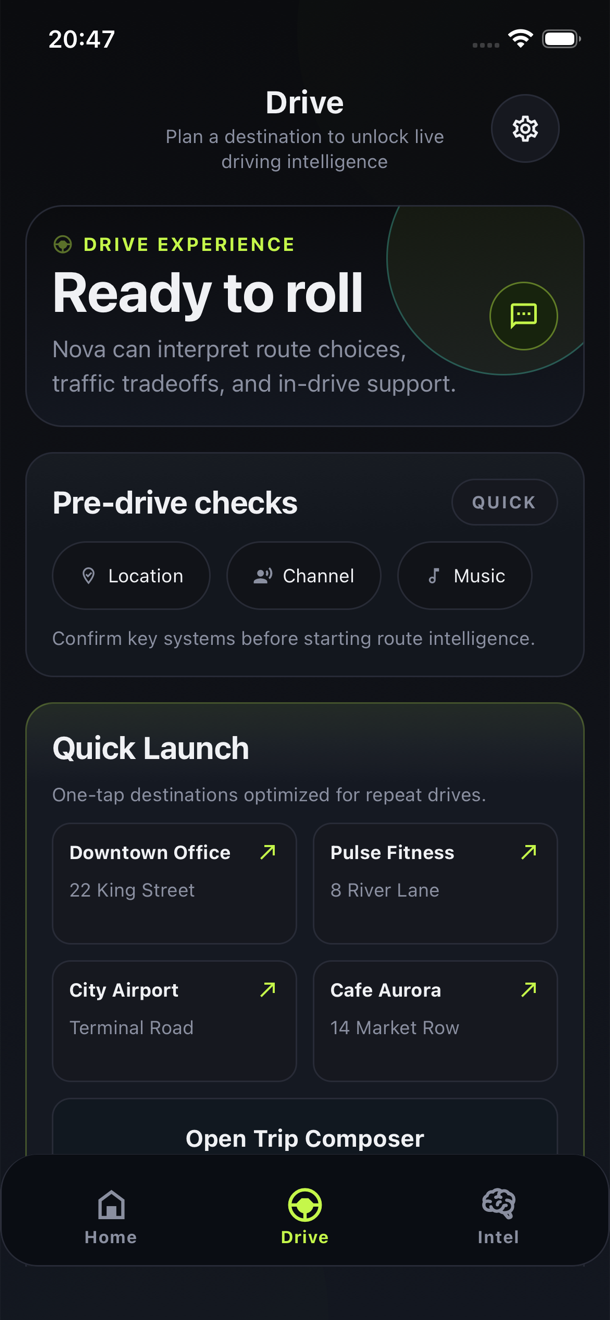
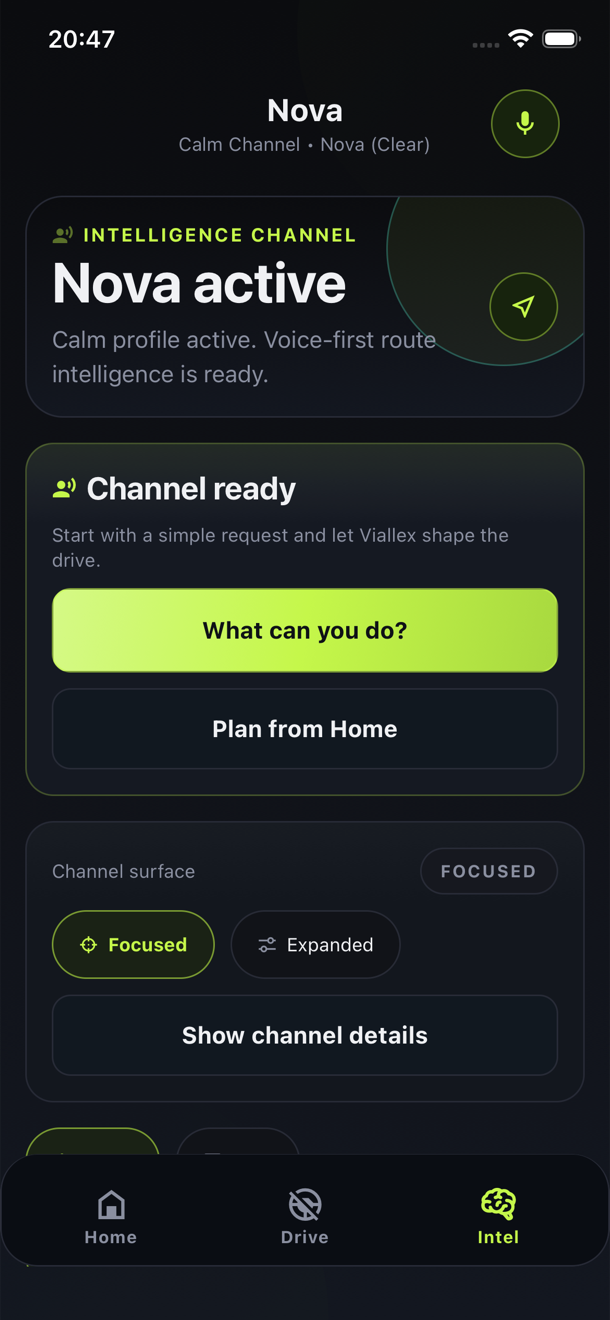
Using current iOS screens: Home, Drive, Intel.
Customer-proof metrics can be replaced with your launch analytics later. Structure is ready for live reporting.
Less Decision Hesitation
Fewer Late Route Switches
Lower Cognitive Load
Higher Guidance Trust
Viallex is an adaptive route intelligence system above maps that turns road complexity into clear, confidence-ranked guidance.
Viallex focuses on decision quality, not just path display. It scores route stability and timing risk so you can commit earlier with more confidence.
Viallex is onboarding early access users now. Join the waitlist below to receive launch updates and priority invites.
No. Viallex is building privacy-first telemetry controls. Data handling is described in the Privacy section and can be configured per release policy.
Ready to test adaptive route intelligence in real-world traffic?
Request access to the first production release. We prioritize drivers who want precision, clarity, and calmer route decisions.
Limited Cohorts: Early access is released in phased waves to maintain output quality and onboarding speed.
For partnerships, pilot requests, press, and investor conversations, contact the Viallex team directly.
Mobility ecosystem, data partnerships, route intelligence collaborations.
Media requests, brand language, story angles, and press kit access.
Operational pilots for fleets and route-intensive teams testing intelligence workflows.